聯絡我們
聯絡我們
我們正在接受一年級至六年級的全年度入學申請,先到先得,不限學期。如果您有任何關於學校或招生程序的問題,請隨時與我們聯絡。我們也歡迎您光臨我們下一次的簡介會,以便了解更多信息。
我們誠邀所有的對百卉九江書院感興趣的家長與我們聯繫。請在下面留言,我們會儘快聯絡您。
陳彥銘
招聘總監及執行董事
若你不是家長,請略過「學生資訊」部分,並在「你是怎樣認識百卉的?」一欄填寫個人資料
In Bloom KKCA Academy’s STEM program, we follow the true spirit of an innovator as we venture into the unknown and do real experiments with Hong Kong as the backdrop and experimental ground. We collect raw data through our projects and contribute real data to the scientific community as we participate in citizen scientist projects. We know the power of science is more than just a score on a report card, but the accumulation of human discoveries that leverage technology and engineering to solve very human problems.
Our STEM program features localization of international standards, such as the Next Generation Science Standards, and real-world, problem-based learning with pathways to STEM fields and occupations. All learners will be expected to develop a basic understanding of the ten core technological competencies below.
Core Technological Competencies:
- Artificial Intelligence
- Material Science & Engineering
- Space
- Environmental Engineering
- Computer Graphics and User Interface Design
- Science and Data Acquisition
- Project Management
- Robotics and Control Technology
- Internet of Things and Digital Media Literacy
- Data Modeling and Simulation
Standards-based Structured Learning
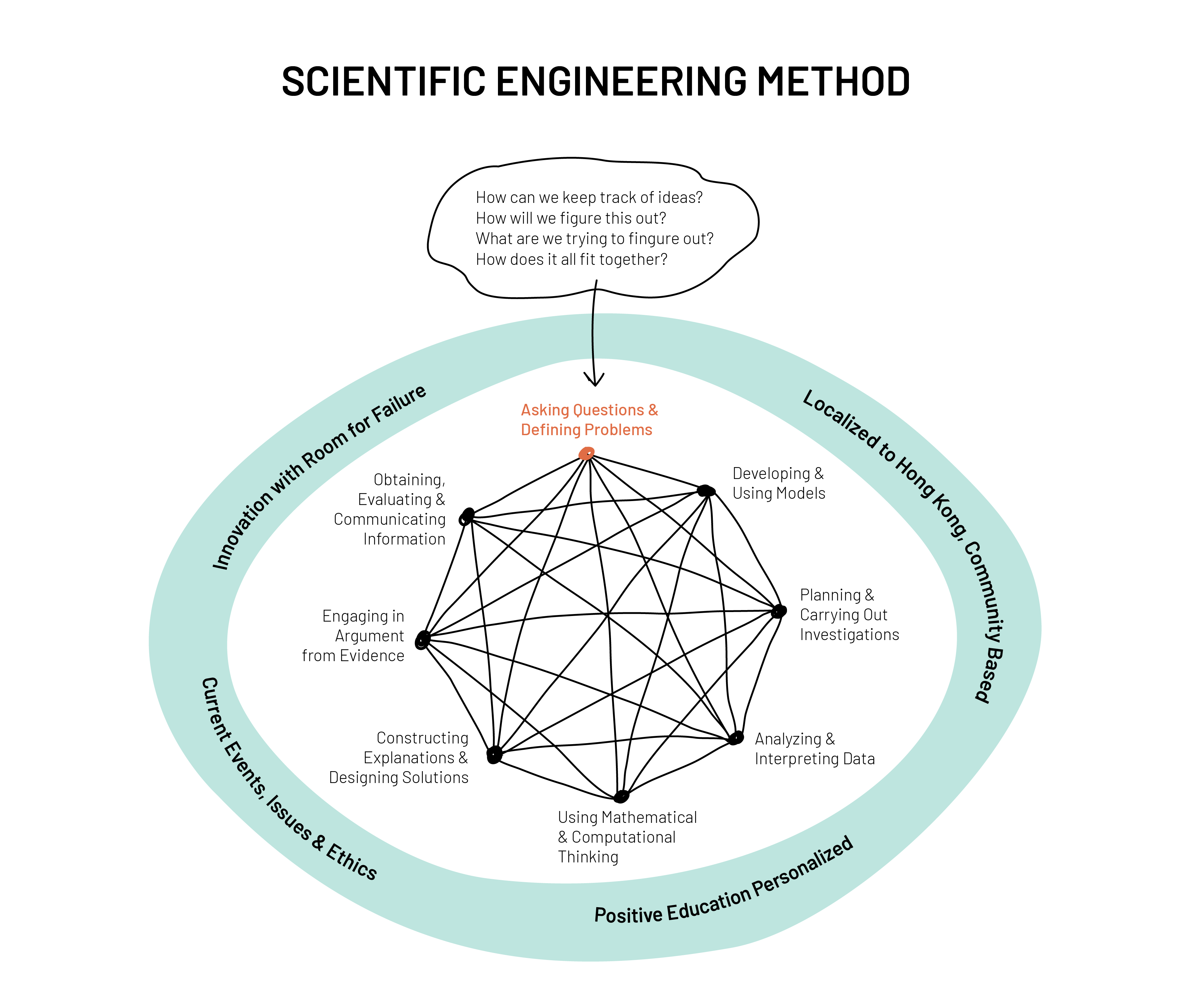
The STEM Program draws from the Next Generation Science Standards (NGSS), a research-based curriculum developed and designed by Nobel Laureates along with a team of education professionals. Drawing on the important areas of current scientific research, the framework is an evidence-based foundation for standards that incorporate the new engineering method with the old scientific method. This new practice emphasizes observational science and applied science that allows for classroom learning experiences that stimulate students’ interest and readies them for the future.
The NGSS reflects the interconnected nature of science as it is practiced and experienced in the real world. NGSS identify (a) scientific and engineering practices (behaviors scientists and engineers engage in), (b) crosscutting concepts (concepts linking the different domains of science), and (c) core ideas in science that all K–12 students should master in order to prepare for success in college and 21st-century careers.
Students will observe scientific phenomena and learn to create raw data sets and record data in different charts and formats. They will then either apply the new data and patterns to a human need or problem. Older students will learn to input these data into computer simulations for further analysis. Creativity, critical thinking, computational thinking, and multimedia scientific communication are all naturally infused in the practice.
Localization and Relevance
We want students to see how STEM works in their daily lives. We incorporate lessons with current events because children learn best in authentic contexts. The natural environment of Hong Kong is used as an experimental learning ground. Students take field trips to many of the abundant and unique biological and geological environments found in Hong Kong. Students spend time practicing observational science by using their sense of sight, smell, touch, and taste to observe, and record findings in their science journals. Incorporating NGSS practices, students apply their newly learned knowledge into designing a solution to an engineering problem. The objective is to pique students’ interest in STEM and achieve memorization through practical everyday use. Students need to see the practical application and connections of classroom learning and the world around them.
Real-World, Problem-Based Learning
The ECS (Explore, Create, Share) Design Cycle guides our primary students to explore real world problems. The cycle naturally incorporates many science concepts and ideas. Students get to experiment and test out their ideas in an authentic way. For example, to reinforce the differences between bacteria and viruses, students would explore the question of “what are germs?” through the relevant lens of the COVID-19 pandemic. Students would brainstorm different ways to design their experiment with bread and take ownership of their learning by controlling different variables: hand wipes, hand sanitizers, soap, rubbing alcohol, and ziploc bags. Students put on their critical thinking caps to figure out what would need to happen before conducting the experiment. Students are able to take it a step further to investigate the correlations between ingredients in the hand sanitizers, wipes, soap, and rubbing alcohol.
Pathways for STEM Fields and Occupations
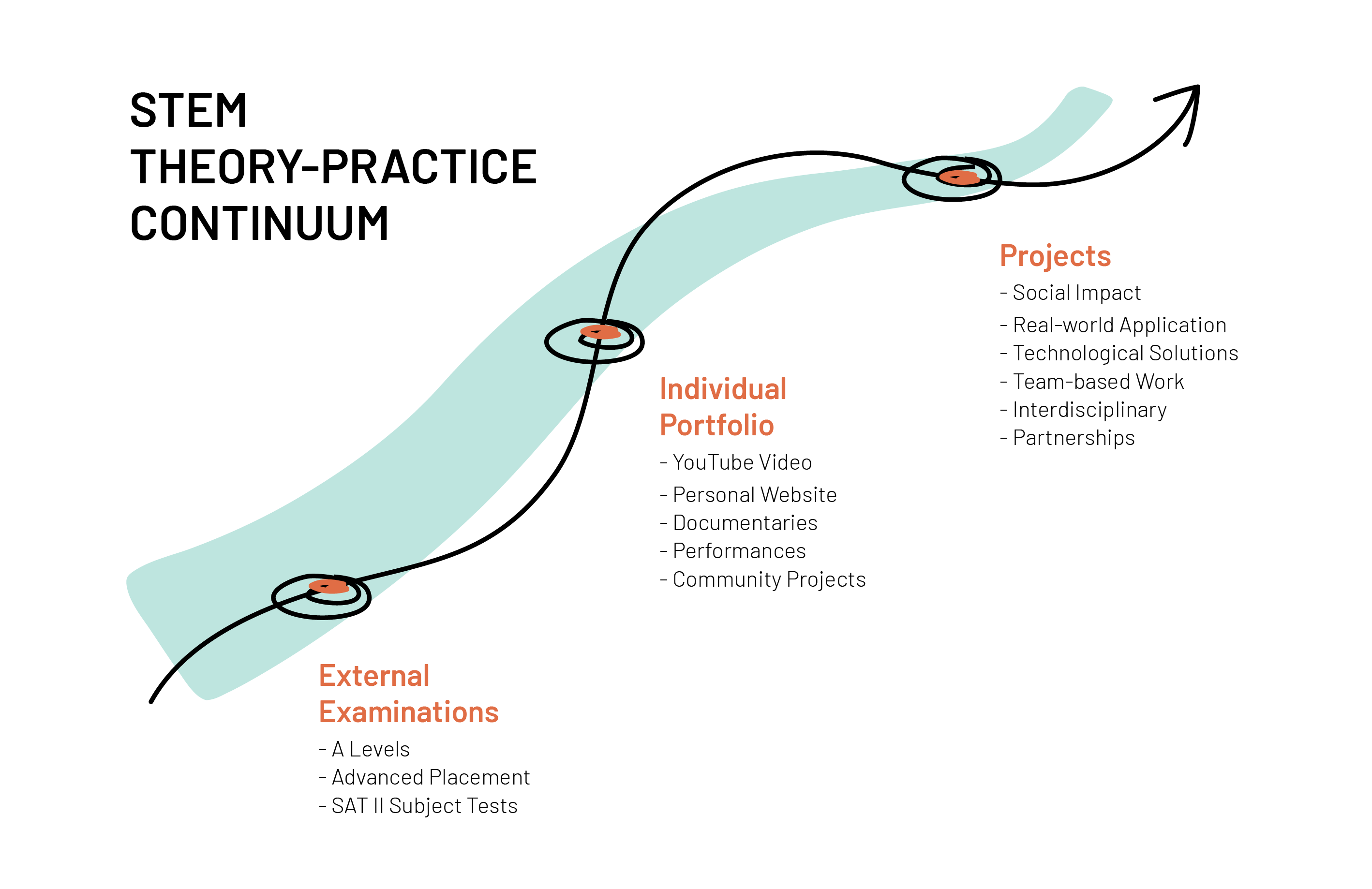
Our goal is to bridge in-school and out-of-school STEM opportunities. Students are exposed to occupations in the industry early on through different field trips and talks from experts in the field.
Primary students work with Ocean Park in their “Little Explorers” and “Junior Explorers” programs. Closely adhering with NGSS standards, the program covers elements from the four disciplinary core ideas
- physical sciences
- life sciences
- earth and space sciences
- engineering, technology, and applications of science
Students are encouraged to ask questions, recognize patterns, and formulate answers to questions about the world around them throughout the program. Students gain firsthand perspectives on how scientists work.
Bloom STEM vs. Traditional STEM
Unlike a traditional STEM classroom, where science experiments are pre-designed, Bloom KKCA Academy focuses on the design of the experiment itself. Do learners understand the purpose of their experiments? Do learners know how to control their experiments so that they can isolate the effect of their treatments? What are the variables and dependencies? Science experiments should allow for critical thinking, and hypotheses should be formed through extensive pre-lab discussion, where students build on existing knowledge and learn to explain their chosen hypotheses. Throughout the experiment and analysis cycle, students use Harvard Project Zero’s visible thinking routines to make observations, analyze their data, and engage in group discussions.
Bloom STEM
The science curriculum is based on the Scientific-Engineering Method so that observational science, raw data collection, data analysis, and modeling are emphasized.
Traditional STEM
The science curriculum is still based on the age-old scientific method built around lab work conducted inside the classroom only. Learners are given a recipe of instructions to follow with a known outcome.
Bloom STEM
Coding through everyday life events
- Giving directions from home to school is a series of if-then-else cases
- Playing the “guess a number” game is like a while loop
- Comparing the English language grammar with pseudocode to understand the application of syntax.
- Playing programming-pair games where one student helps another blindfolded student navigate a map by giving a specific set of instructions.
Traditional STEM
Coding through screens only so that students become too “click-happy”.
- Relying on the computer to give instant feedback instead of working out the algorithm in their head.
- Constantly changing one simple variable or value and clicking “run” again and again, without truly understanding why it didn’t work the last time.
Bloom STEM
Teach computational thinking through everyday life routines, such as
- How to brush teeth properly is an algorithm.
- Learning how to take apart a toy step by step is decomposition.
- Listening to music and appreciating its repeating but spiraling melody is pattern recognition.
- Writing a summary for a newspaper article is abstraction.
Traditional STEM
- Not covering computational thinking at all unless there is programming class.
- Have students memorize what are the four components of computational thinking
- Learn to spell the words and memorize their definitions without giving examples.
- Give examples only in code or programming languages.
Bloom STEM
Makerspace products have real clients or users.
- Learners play different roles in the design process, such as designer, tester, finance manager, engineer, etc.
- Learners build confidence through feedback from real clients and users.
- A risk-taking attitude is reinforced due to the prototyping model within the Scientific-Engineering Method.
- Empathy is developed through the Stanford Design Process because you have to understand your client’s true pain-point in order to design a product that solves their problem.
Traditional STEM
Makerspace products are made for a letter grade or a score.
- Projects that are standardized by teachers for easy grading purposes.
- Students are often afraid to take risks and fear failing.
- Only a few students’ confidence is boosted while the rest of the class feels bad because it is graded on a curve.
- Product design is either done as directed by the teacher or the end-user is the student him/herself.
CARE, THINK, ACT
LOREM IPSUM DOLOR SIT AMET.

CARE
LOREM IPSUM DOLOR SIT AMET.
CARE
LOREM IPSUM DOLOR SIT AMET.
CARE
LOREM IPSUM DOLOR SIT AMET.